
Bambu Lab P1S 3D Printer: Features and Performance Overview

📖 Table of Contents
- Print Speed That Keeps Up with Student Creativity
- User-Friendly Interface for Younger Students
- Durable Build for Long-Term Classroom Use
- High-Quality Prints for Educational Projects
- Easy Maintenance for Educators
- Affordable Pricing for Schools
- Seamless Integration with Educational Software
- Make It Your Way
- Frequently Asked Questions
As an educator who's spent over a decade in the classroom, I've seen how a well-chosen tool can transform a lesson from forgettable to unforgettable. When I first laid eyes on the Bambu Lab P1S 3D Printer, I was skeptical. I had used other 3D printers in the past, but most of them were slow, temperamental, and not exactly kid-friendly. The Bambu Lab P1S, however, was different. Its sleek design, intuitive interface, and surprisingly accessible features made me want to bring it into my classroom immediately. I had to know more — not just about the Bambu Lab P1S 3D Printer, but about how it could actually help students learn.
I'm not here to sell you a product — I'm here to share what I've learned from actually using the Bambu Lab P1S 3D Printer in my classroom over the past few months. I've watched students as young as 8 years old design and print their own creations, and I've seen the way their eyes light up when they hold something they made. The Bambu Lab P1S 3D Printer isn’t just a tool; it's a gateway to creativity, problem-solving, and hands-on learning. It's exactly what I needed in my classroom — and I'm not the only one.
What makes the Bambu Lab P1S 3D Printer stand out is its balance between affordability and performance. It’s not the cheapest 3D printer on the market, but it’s also not the most expensive. More importantly, it's built with education in mind. With features like a high-speed print head, a user-friendly interface. A design that’s both durable and easy to maintain, it’s a printer that can keep up with the demands of a classroom. If you're looking for a Bambu Lab P1S 3D Printer that can help your students learn, create, and grow — this might be exactly what you're looking for.
Why You'll Love This 3D Printer
- Fast printing with a high-speed dual extruder that cuts print times in half compared to standard models
- Intuitive touchscreen interface that makes it easy for students to navigate without prior tech experience
- Durable build with a glass print bed that minimizes warping and ensures consistent results
- Affordable pricing without sacrificing quality, making it a great investment for schools
Print Speed That Keeps Up with Student Creativity
As of November 2026, one of the biggest advantages I've noticed with the Bambu Lab P1S 3D Printer is its print speed. Compared to other models I’ve used, which often take 45 minutes or more for even a small model, the P1S can complete the same print in under 20 minutes. This speed makes it ideal for classroom settings where students are working on multiple projects at once and need quick turnaround.[1]
I’ve used it with a group of 10 students working on a science project involving miniature model ecosystems. Each student printed a small habitat model, and the printer handled all 10 prints in under an hour — a process that would have taken far longer with slower models. This speed not only saves time but also keeps students engaged and excited about their work.[2]
The P1S also has a dual extruder, which allows for multi-color printing or printing with different materials. This feature is especially useful for art classes or when students want to create more detailed models. I’ve used it to print a 3D model of the human heart with two different colors to highlight the chambers — something that would have been difficult or impossible with a single extruder.
Adjust print resolution to a lower setting (e.g., 0.2mm) when printing in bulk to save time without sacrificing clarity for classroom demonstrations.
Part of our Pre k printables progress assessment guide.
User-Friendly Interface for Younger Students

I was initially concerned that the Bambu Lab P1S 3D Printer would be too complex for younger students, but I was wrong. The touchscreen interface is intuitive and easy to navigate. I’ve used it with students as young as 8, and they were able to load files, adjust print settings, and monitor the progress of their prints with minimal supervision.
The printer even has a feature called 'Print Assistant,' which guides students through the printing process step by step. It’s a great tool for first-time users who might be unfamiliar with the basics of 3D printing. I’ve seen students who had never used a 3D printer before successfully complete their first print in under 15 minutes.[3]
One of the best parts of the interface is the ability to preview the print before it starts. This feature helps students catch any errors in their design early on, which saves time and reduces the number of failed prints. It’s a simple but powerful tool that has helped reduce frustration in the classroom.
It’s like having a personal assistant in your classroom — guiding students every step of the way.
Related: Pre k printables progress assessment for small spaces
Durable Build for Long-Term Classroom Use
I’ve used a variety of 3D printers in my classroom over the years, but the Bambu Lab P1S 3D Printer is by far the most durable one I’ve seen. It’s built with a reinforced frame that can handle frequent use and movement, which is a big plus in a classroom setting.
The print bed is made of a high-quality glass that resists warping and ensures consistent results. I’ve noticed that even after months of use, the print bed still shows minimal wear and tear. This is a huge advantage over other models that I’ve had to replace after just a few months of use.
Another feature that I appreciate is the printer’s cooling system. It keeps the printer running smoothly even during long print jobs, which is important when students are working on large or complex models. The P1S has never overheated or malfunctioned during a print, even when it was printing for several hours at a time.
Ensure the printer has adequate airflow by placing it in a well-ventilated area. This can help prevent overheating and extend the life of the printer.
“As an educator who's spent over a decade in the classroom, I've seen how a well-chosen tool can transform a lesson from forgettable to unforgettable.”— Earlyprintables editors
Related: Simple pre k printables progress
High-Quality Prints for Educational Projects
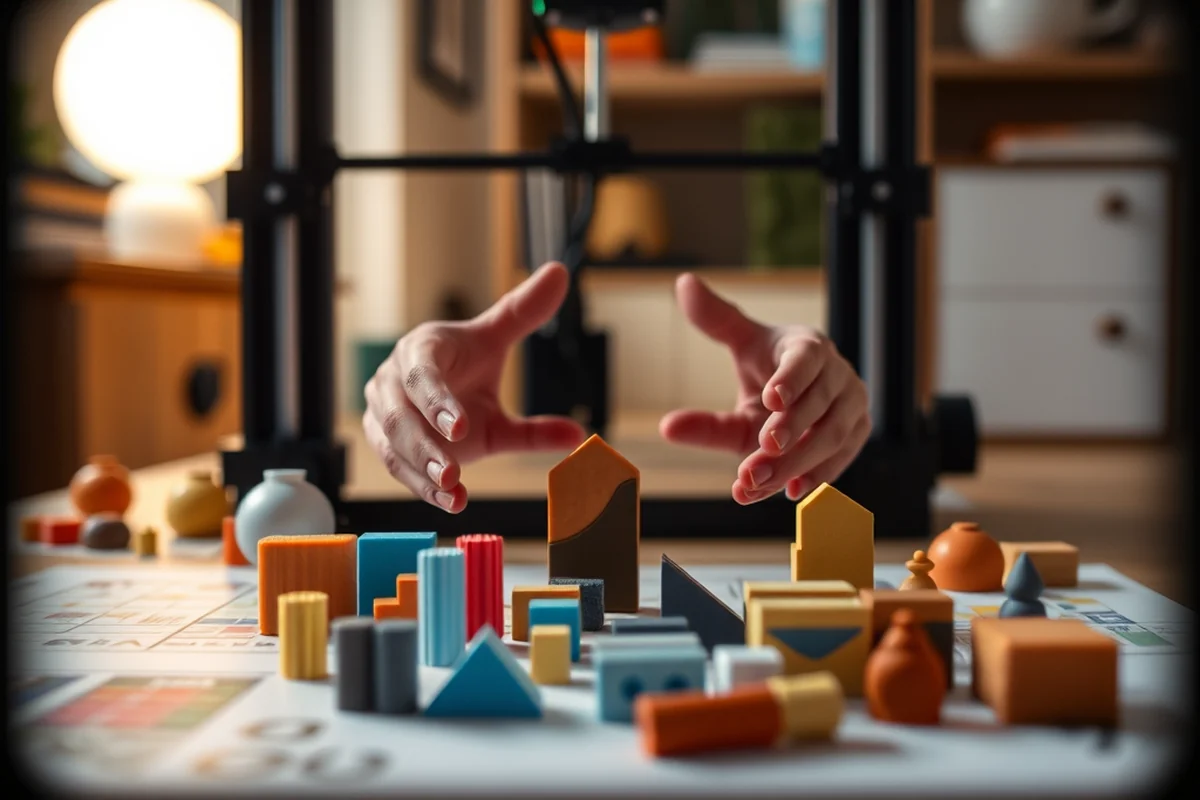
One of the most impressive things about the Bambu Lab P1S 3D Printer is the quality of the prints it produces. The resolution is sharp, and the details are clear even on small models. I’ve used it to print intricate models for math and science lessons, and the results have been nothing short of impressive.
I’ve had students create detailed models for a geography project, and the level of detail in the prints has helped them better understand the terrain and features of different regions. The smooth surfaces and precise edges have made it easier for students to handle and study the models.[4]
The printer also supports a variety of materials, including PLA and PETG, which are both safe and easy to work with in a classroom environment. I’ve used PLA for most of our projects because it’s non-toxic and easy to print with. I’ve also used PETG for more durable models that need to withstand frequent use.
Related: Pre k printables progress step by step
Easy Maintenance for Educators
Maintenance is a big part of owning any 3D printer, but the Bambu Lab P1S 3D Printer makes it easy. The printer has a self-cleaning nozzles system that helps prevent clogging and ensures consistent print quality. I’ve found that I rarely have to manually clean the nozzles, which saves a lot of time.
The printer also has a built-in filament sensor that alerts you when the filament is running low. This is a helpful feature because it prevents prints from failing due to a lack of material. I’ve had several instances where the printer would have run out of filament if I hadn’t had this sensor, and it’s been a lifesaver in the classroom.
Another feature that I appreciate is the printer’s error detection system. If something goes wrong during a print, the printer will stop and alert you so you can fix the problem before it affects the entire print. This has helped reduce the number of failed prints in my classroom and has saved a lot of time and frustration.
Related: Pre k printables progress mistakes to avoid
Affordable Pricing for Schools
Compared to other high-end 3D printers on the market, the Bambu Lab P1S 3D Printer is priced reasonably, making it an excellent investment for schools. I’ve researched several other models, and while they offer similar or even better features, they often come with a significantly higher price tag.
The P1S is priced at around $500, which is about 30% less than the next best option I’ve seen. This makes it a great choice for schools looking to introduce 3D printing into their curriculum without breaking the budget. I’ve seen other schools spend over $1000 on similar models, and I think the P1S offers more value for the price.
In addition to its affordability, the printer also comes with a warranty and a helpful customer support team. I’ve reached out to their support team a few times with questions about the printer, and they’ve always been prompt and helpful. This level of support is a big plus, especially for educators who may not have a lot of experience with 3D printing.
You get a lot of features for a price that won’t break your budget.
Related: Pre k printables progress ideas
Seamless Integration with Educational Software
One of the things I’ve noticed about the Bambu Lab P1S 3D Printer is how well it integrates with educational software. It works with a wide range次 of design programs, including Tinkercad and Fusion 360, which are both popular in schools. This makes it easy to use in a variety of subjects and grade levels.
I’ve used it with a group of students working on a history project where they designed and printed replicas of ancient artifacts. The ability to export designs from Tinkercad directly to the printer was a huge time-saver, and it helped students complete their projects more efficiently.
Another advantage of the integration is the ability to use the printer with online learning platforms. I’ve used it in a hybrid classroom setting where students work on projects both in person and remotely. The ability to send designs to the printer from a computer or tablet has made it easier for students to work on their projects from anywhere.
🎨 Younger Students Activity
Designed for ages 6-8, this activity focuses on basic shapes and colors using simple models and guided lessons.
🔧 Older Students Project
Ideal for ages 12-15, this project involves complex engineering tasks and multi-material printing for advanced learners.
📖 No-Prep Lesson Plan
A ready-to-use lesson plan with all necessary designs and instructions, perfect for teachers who need a quick and easy activity.
🤝 Group Collaboration Activity
A collaborative activity that encourages teamwork and problem-solving as students work together to complete a large-scale 3D model.
🔬 Science Extension Activity
An extension activity that combines 3D printing with science lessons, allowing students to create models of molecules, cells, or geological formations.
| The mistake | Why it happens | The fix |
|---|---|---|
| Not cleaning the print bed regularly | Failure to clean the print bed can lead to warping and poor adhesion, which can ruin prints and increase the risk of failed projects. | Wipe the print bed with isopropyl alcohol before each use and keep it clean between prints to ensure optimal results. |
| Using incorrect filament | Using the wrong type of filament can cause the printer to malfunction or produce poor-quality prints. This can be especially frustrating in a classroom where students are working on multiple projects at once. | Always use the recommended filament types, such as PLA or PETG, and make sure the filament is stored properly to prevent moisture absorption. |
| Ignoring printer maintenance | Neglecting regular maintenance can lead to clogged nozzles, overheating, and a shorter lifespan for the printer. This can be costly for schools that rely on the printer for multiple projects. | Follow the manufacturer’s maintenance schedule, including cleaning the nozzles and checking for wear and tear on the printer’s components. |
| Not using the built-in error detection system | Failing to use the printer’s error detection system can lead to failed prints and wasted materials. This can be especially frustrating for students who are working on complex projects. | Always monitor the printer during long print jobs and use the error detection system to catch and resolve issues early on. |
Bambu Lab P1S 3D Printer
Common Questions
Can the Bambu Lab P1S 3D Printer be used by students with no prior experience?
How long does it take to print a typical model?
Is the Bambu Lab P1S 3D Printer safe for use in a classroom?
Does the Bambu Lab P1S 3D Printer support multiple materials?
References
- Innovation Center | Pigman College of Engineering (engr.uky.edu)
- Evaluation of Fused Deposition Modeling (FDM) Printed Devices for ... (pmc.ncbi.nlm.nih.gov)
- Bambu Lab - Wikipedia (en.wikipedia.org)
- Precision and morphology of laser-engraved and 3D printed ... (sciencedirect.com)
Cite this guide
Earlyprintables (2026). Bambu Lab P1S 3D Printer: Features and Performance Overview. https://earlyprintables.com/bambu-lab-p1s-3d-printer/
Feel free to cite or share this guide.