What Is 3D Printing For Beginners
📖 Table of Contents
I remember the first time I held a 3D-printed model in my hands — it was a tiny dinosaur, its scales perfectly textured and its tail curled just so. It felt like holding a piece of magic, and it sparked a curiosity that still lingers today. For beginners, 3D printing is more than just a tool; it’s a gateway to creativity, problem-solving, and learning by doing. If you’re wondering what is 3D printing for beginners, think of it as a way to take an idea from your mind and turn it into something real, tangible, and sometimes even useful.
As an educator, I’ve watched countless students experience that same moment of awe when they see their designs come to life. 3D printing has transformed the way we teach and learn, making abstract concepts concrete and empowering students to explore their ideas in ways that were once impossible. Whether you're a teacher looking to introduce a new topic or a parent wanting to spark your child’s interest in STEM, 3D printing offers a unique and engaging way to do just that.
The best part is that you don’t need a degree in engineering or access to a high-tech lab to get started. With the right tools and a little guidance, even the youngest learners can begin exploring the world of 3D printing. It’s a learning experience that blends art, science, and technology — and that’s exactly why it’s so powerful for beginners.
Why You'll Love This Activity
- Encourages creativity and problem-solving
- Makes abstract ideas tangible and real
- Empowers learners of all ages to turn ideas into objects
- Provides a safe, interactive way to explore STEM concepts
What Exactly Is 3D Printing?
As of September 2026, Imagine slicing a cake into thin layers and then stacking them one by one to build a tower — that’s essentially what 3D printing does. The process starts with a digital model, which is then sliced into layers by software. A 3D printer then builds the object layer by layer, using materials like plastic, resin, or even metal. For beginners, this means you can design anything from simple shapes to complex structures with the help of user-friendly software and affordable printers.
Many 3D printers designed for educational use are beginner-friendly, with intuitive interfaces and support for basic file formats like STL. These printers often come with pre-designed models that are perfect for first-time users. The most common type used in schools and homes is the fused deposition modeling (FDM) printer, which uses a heated nozzle to extrude melted plastic in precise patterns.
The real magic happens when you see your design materialize into a physical object. It’s a powerful way to bridge the gap between imagination and reality, and it’s especially effective for visual learners who benefit from hands-on experiences. For young students, this process can be a revelation — they see their ideas come to life in ways they never imagined.
Begin with pre-designed models available in 3D printing communities or educational platforms. This helps you understand how the software and printer work before creating your own designs.
Part of our Pre k printables progress assessment guide.
Why 3D Printing Is Great for Education
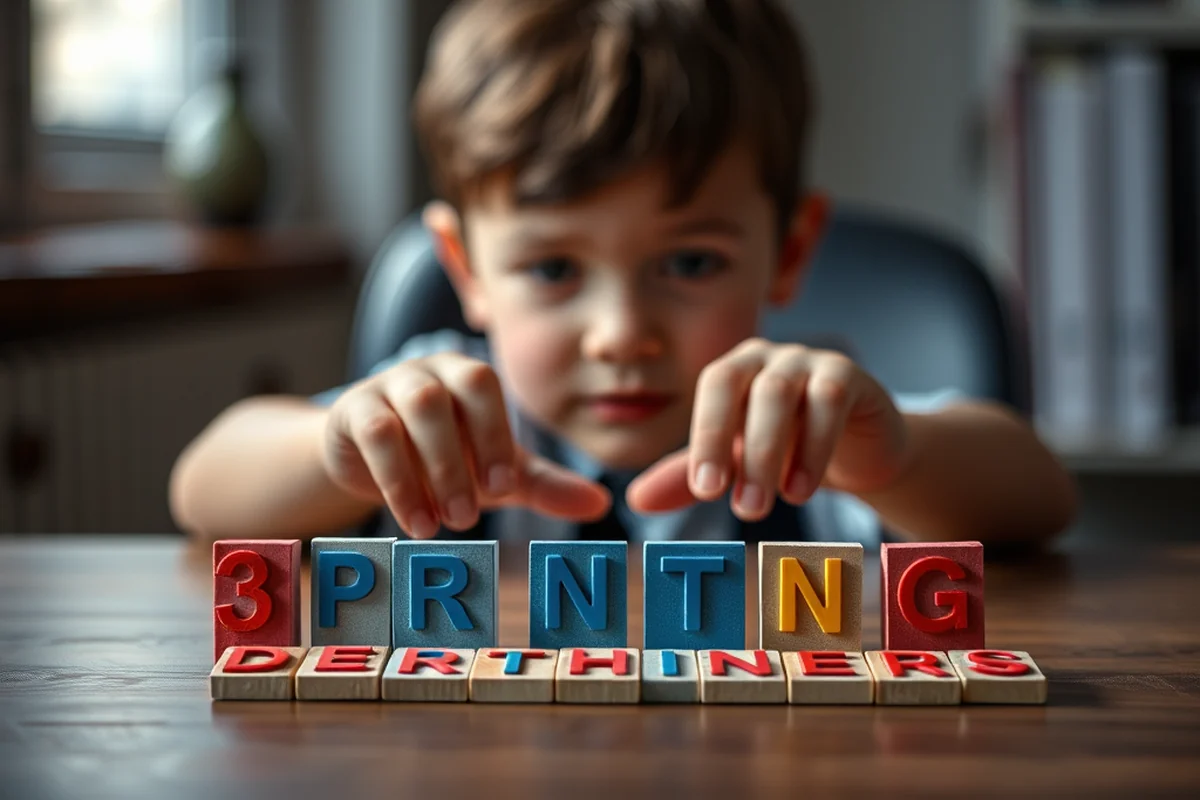
In the classroom, 3D printing allows students to visualize complex ideas and engage with subjects like geometry, engineering, and biology in a tangible way. For example, a student studying anatomy can create a 3D-printed model of a heart to understand how blood flows through its chambers. This kind of interactive learning is far more engaging than reading from a textbook or watching a video.
Teachers have also used 3D printing to help students explore topics like architecture, where they can design and print miniature buildings, or history, where they can create replicas of ancient artifacts. It's a versatile tool that can be adapted to almost any subject area, making it an invaluable addition to any educational setting.
And 3D printing encourages problem-solving and critical thinking. When a printed model doesn’t work as expected, students learn to troubleshoot, adjust their designs, and try again. This iterative process is a key part of learning and helps build resilience and perseverance.
3D printing turns abstract ideas into real-world objects — and that’s the power of education.
Related: Pre k printables progress assessment mistakes to avoid
Getting Started: What You Need
The first thing you’ll need is a 3D printer. There are many types, but for beginners, FDM printers are the most accessible and affordable. You can find models starting at around $200, though higher-end models will offer better quality and features. Next, you’ll need design software. Many printers come with their own software, but you can also use free tools like Tinkercad or Blender for more advanced designs.
Once you have a model ready, you’ll need to prepare it for printing. This involves slicing the design into layers using software like Cura or Simplify3D. These programs also let you adjust settings like print speed, layer height, and infill density. It’s a simple but important step that affects the final quality of your print.
Finally, you’ll need the right materials. Most beginner printers use PLA (polylactic acid), a biodegradable plastic that’s easy to print with and safe for children. It’s also available in a wide range of colors, making it a fun and versatile option for educational use.
Take advantage of free design software and affordable materials like PLA to keep costs low and make 3D printing accessible for beginners.
“I remember the first time I held a 3D-printed model in my hands — it was a tiny dinosaur, its scales perfectly textured and its…”— Earlyprintables editors
Related: Diy pre k printables progress assessment
How to Design Your First 3D Model
If you’re new to 3D design, start with user-friendly software like Tinkercad. It has a drag-and-drop interface that makes it easy to create basic shapes and combine them into more complex objects. You can even import pre-designed models and modify them to suit your needs. The key is to start small and gradually build your skills.
Once you’ve created a model, you’ll need to export it in a format like STL or OBJ. These are the standard file types used for 3D printing. After exporting, you can use slicing software to prepare the model for printing. This step allows you to adjust settings like layer height and print speed, which can affect the final outcome.
Printing your first model can be a bit nerve-wracking, but it’s also incredibly rewarding. I remember my first print — a small cube that took about 45 minutes to complete — and the moment I saw it pop out of the printer, I knew I was hooked. It was a small step, but it opened the door to a world of possibilities.[1]
Related: Simple pre k printables progress assessment
Tips for Successful 3D Printing
One of the most important tips is to always check your model for errors before printing. Many 3D modeling programs have a ‘check for errors’ feature that can detect issues like overlapping surfaces or missing parts. Fixing these problems beforehand can save time and materials.
Another key tip is to use the right print settings. For example, printing at a lower layer height (like 0.1 mm) will produce smoother surfaces, but it will also increase printing time. You can experiment with different settings to find what works best for your printer and materials.
Lastly, don’t be afraid to try again if something goes wrong. 3D printing is a learning process, and mistakes are part of the journey. I’ve had prints that came out warped or with visible layer lines, but each time I learned something new and improved my skills.
Related: How to pre k printables assessment
How to Use 3D Printing in the Classroom
In my experience, one of the best ways to use 3D printing in the classroom is to integrate it into science and math lessons. For example, students can design and print models of molecules to better understand chemical structures or create scale models of planets to study the solar system. These hands-on activities help students grasp complex concepts in a more tangible way.
3D printing can also be used in art classes to allow students to create sculptures or other 3D artworks. It’s a great way to combine creativity with technology and encourage students to think outside the box. Also, it can be used in history lessons to recreate historical artifacts or architectural structures, giving students a deeper appreciation for the past.
Another benefit is that 3D printing allows for differentiated instruction. Students with different learning styles and abilities can engage with the material in ways that suit them best. For example, a student who struggles with reading can use a 3D-printed model to visualize a concept, while another student can focus on the design and engineering aspects of the project.
3D printing is more than a tool — it's a bridge between imagination and reality.
Related: Budget pre k printables progress
The Benefits of 3D Printing for Younger Learners
For children as young as 3, 3D printing can be a fun and interactive way to explore the world around them. Using simple design software, they can create shapes, patterns, and even small models that represent things they see in their daily lives. This helps develop their fine motor skills, hand-eye coordination, and spatial awareness.
In early childhood education, 3D printing can be used to introduce basic concepts like colors, shapes, and patterns. Teachers can guide students through simple design challenges, such as creating a 3D-printed animal or a house. These activities not only teach kids about design and technology but also encourage creativity and problem-solving.
One of the most exciting aspects of 3D printing for young learners is the sense of accomplishment it provides. When a child sees their design come to life, it’s a powerful moment that can boost their confidence and motivate them to continue exploring and learning.
🎨 Younger Kids (Ages 3-6)
For the youngest learners, focus on simple shapes, colors, and basic designs that can be created with guided templates.
🧱 Older Kids (Ages 7-12)
For older children, introduce more complex designs and encourage creativity through open-ended projects and challenges.
📖 No-Prep Version
Use pre-designed models and downloadable files to make the activity accessible and easy for beginners with no design experience.
👥 Group Version
Encourage collaboration by having students work in teams to design and print a shared project, promoting teamwork and communication.
🚀 Extension Activity
Challenge students to modify and improve upon existing designs, encouraging innovation and advanced learning.
| The mistake | Why it happens | The fix |
|---|---|---|
| Printing with the wrong material | Using materials like ABS or nylon can be dangerous for young children and may release harmful fumes. | Always use PLA or other safe, non-toxic materials designed for educational use. |
| Ignoring print settings | Incorrect settings can lead to poor-quality prints or even damage to the printer. | Take the time to learn about the basic settings and adjust them according to your model and printer requirements. |
| Overlooking model preparation | Failing to check for errors in the model can result in failed prints or models that don’t function as intended. | Always run a ‘check for errors’ feature in your design software before printing. |
| Not allowing the printer to cool down | Removing a print too soon can cause it to warp or break, especially with materials like PLA. | Wait for the print to fully cool before removing it from the printer bed. |
What Is 3D Printing For Beginners
Common Questions
What kind of materials are safe for 3D printing with young children?
Can 3D printing be used for subjects other than science and math?
What if my printer doesn’t work the first time?
Can I use free software for 3D printing with my students?
References
- New Undergraduate Student Handbook (orientation.caltech.edu)
Cite this guide
Earlyprintables (2026). What Is 3D Printing For Beginners. https://earlyprintables.com/what-is-3d-printing-for-beginners/
Feel free to cite or share this guide.