
How To Get Started 3D Printing
📖 Table of Contents
- Choosing the Right 3D Printer for Kids
- Understanding the Basics of 3D Printing
- Finding the Right 3D Printing Software
- Creating Your First 3D Print
- Exploring 3D Printing Projects for Kids
- Maintaining Your 3D Printer
- Encouraging Creativity and Problem-Solving Through 3D Printing
- Make It Your Way
- Frequently Asked Questions
I still remember the first time my son held a 3D-printed dinosaur in his hands — it was a moment that felt like magic. We had printed it using a small desktop printer, and watching him trace the ridges of the model's back made me realize how powerful this technology could be for learning. If you're wondering how to get started 3D printing, you're not alone. This is a journey that begins with curiosity and ends with creativity.
When I first dipped my toes into the world of 3D printing, I was overwhelmed by the options. But once I got my first printer and tried a few simple projects, I saw how accessible and educational this tool could be for kids. It's not just about making cool objects — it's about sparking a passion for problem-solving, engineering, and art. Whether you're a teacher, a parent, or a student, this is a journey that's worth taking.
The beauty of 3D printing lies in its simplicity and the endless possibilities it offers. I've seen children as young as six create their own toys and models, and I've watched them grow into confident creators who understand the power of design and iteration. If you're looking to get started 3D printing, the steps are straightforward, and the rewards are immense — both for the person doing the printing and for those who benefit from their creations.
Why You'll Love This Educational Tool
- Encourages hands-on learning through tangible creation
- Develops problem-solving and design thinking skills
- Fosters creativity and innovation in students
- Opens doors to STEM fields with real-world applications
Choosing the Right 3D Printer for Kids
As of September 2026, when I first started looking for a 3D printer for my classroom, I was overwhelmed by the options. I eventually settled on a Creality Ender-3 V2 because it's affordable, reliable, and easy to use for beginners. It's important to look for a printer that has a user-friendly interface and a sturdy build. A good starting point is to invest in a printer that uses PLA filament — it's safe, easy to print with, and has low melting temperatures, making it ideal for educational settings.
I also made sure to choose a printer that came with a warranty and good customer support. After a few weeks of use, I found the printer to be very reliable, and even my students were able to operate it with minimal supervision. The printer itself is compact, so it didn't take up too much space in my classroom, which was a major plus.
One of the most important factors I considered was the print quality. The Ender-3 V2 produces clear, detailed models that are perfect for classroom demonstrations and student projects. It also has an enclosed build chamber, which helps prevent filament from warping during the printing process. This was a game-changer for me, as it significantly reduced the number of failed prints.
Look for printers with enclosed build chambers and automatic cooling systems to ensure a safe learning environment for kids.
Part of our Pre k printables by age grade guide.
Understanding the Basics of 3D Printing
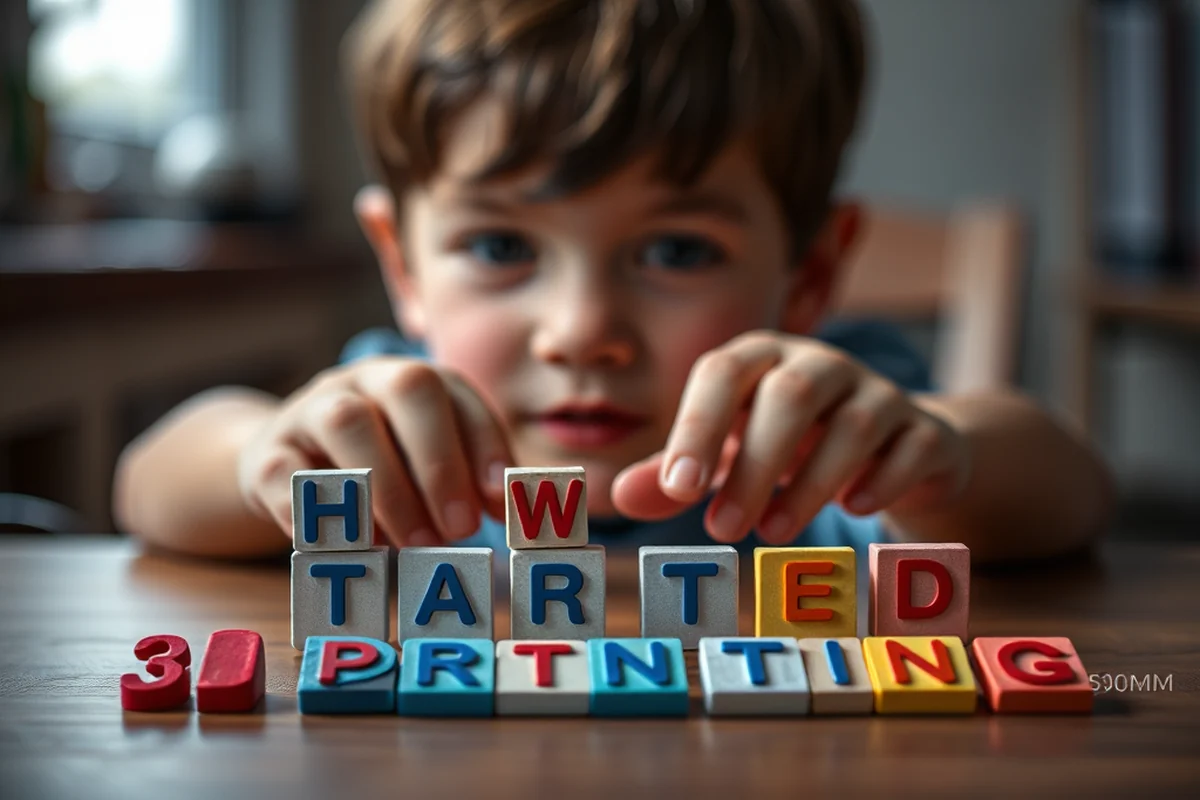
When I first tried 3D printing, I had no idea how the process actually worked. It was like stepping into a completely new world. I quickly learned that 3D printing involves creating a digital model, which is then sliced into layers using specialized software. These layers are then printed one by one, building up the final object.
One of the first things I did was install Cura, a free slicing software that made the process much easier. I found that it had a user-friendly interface and lots of tutorials to help me get started. I also learned that the software allowed me to adjust the print speed, layer height, and infill density — all of which affected the final result.
After a few trial prints, I realized how important it is to understand the basics of file formats and slicing settings. I found that using.STL files was the standard for most 3D printers, and I quickly learned to adjust the layer height to get the best results. I also discovered that the infill density could be changed to make the model lighter or more durable, depending on the project.
Understanding the basics is like holding the key to a whole new world of creation.
Related: Best pre k printables by age grade
Related: Pre k printables grade ideas
Related: Simple pre k printables by age grade
Finding the Right 3D Printing Software
I remember the first time I tried to use slicing software — it felt a bit intimidating, but I quickly realized that it was a crucial part of the 3D printing process. I settled on Cura because it was free, easy to use, and had a large community of users who shared tips and tricks. I found that it allowed me to customize my prints in ways I hadn’t even imagined.
Another thing I loved about Cura was its ability to preview the print before it started. This was especially useful when I was working with my students, as it helped them understand what their designs would look like once they were printed. I also found that the software allowed me to add supports and adjust the print settings to ensure that the final models were accurate and strong.
Over time, I discovered that there were other software options, like Simplify3D and Fusion 360, that were also great for more advanced users. However, for beginners, I would still recommend starting with Cura because of its simplicity and the wealth of resources available online.[1]
Free slicing software like Cura and Tinkercad are perfect for educational settings and can help you get started without breaking the bank.
“I still remember the first time my son held a 3D-printed dinosaur in his hands — it was a moment that felt like magic.”— Earlyprintables editors
Related: Affordable pre k printables grade
Related: Pre k printables by age grade on a budget
Creating Your First 3D Print

When I finally created my first 3D print, I was amazed at how quickly it came together. I had designed a simple model in Tinkercad and then used Cura to slice it into layers. The process was straightforward, and after a few hours, I had a completed model in my hands. It was a small object — a basic shape — but it felt like a huge accomplishment.
One of the most important things I learned during this process was the importance of calibration. I spent a few hours adjusting the printer's bed and ensuring that the extruder was properly aligned. It took some trial and error, but once everything was set, the prints came out much better. I also found that using a level bed made a huge difference in the quality of the prints.
I also discovered that it was important to let the first print cool completely before removing it from the printer. I had tried to remove it too soon once, and it came off in pieces. After that, I learned to be patient and wait for the print to fully cool down before taking it out. This small change made a big difference in the success rate of my prints.
Exploring 3D Printing Projects for Kids
When I first started using 3D printing in my classroom, I was amazed at how quickly the kids caught on. I had a few different projects in mind, from simple shapes to more complex models. One of the first projects we did was creating a set of alphabet letters. The kids loved being able to print out their own letters and use them to build words.
Another project we worked on was designing and printing small toys. The kids were thrilled when they saw their designs come to life. I found that it was important to keep the projects simple at first, and then gradually introduce more complex designs as the kids became more confident. I also made sure to provide a variety of models for them to choose from, so they could see what was possible.
One of the most rewarding projects we did was creating custom name tags for the students. Each child designed their own tag, and then we printed them out. It was a great way to introduce them to the concept of personalization and individual creativity. I found that the kids were incredibly proud of their work, and it was a great confidence booster for many of them.
Maintaining Your 3D Printer
After using my 3D printer for a few months, I realized that regular maintenance was just as important as the initial setup. I found that cleaning the printer regularly — especially the nozzles and the build plate — made a huge difference in the quality of the prints. I also discovered that keeping the printer in a dry environment helped prevent filament from becoming brittle and breaking.
One of the things I did was replace the nozzle every few months to ensure that the printer continued to produce high-quality prints. I also learned that it was important to check the belts and pulleys regularly to make sure they weren't worn down. I found that using a cleaning brush and some isopropyl alcohol was a quick and effective way to keep the printer in top condition.
Another thing I learned was the importance of monitoring the printer during long prints. I had a few instances where the printer jammed or the filament got tangled, but I quickly learned that regular checks helped prevent these issues. I now make it a habit to check on the printer every few hours, especially during longer prints.
Regular maintenance is the secret to a printer that keeps on printing.
Encouraging Creativity and Problem-Solving Through 3D Printing
I've seen firsthand how 3D printing can transform the way students approach learning. One of the most impressive things I've noticed is how it encourages students to think critically and solve problems creatively. When we worked on a project where the kids had to design and print a bridge that could hold a certain amount of weight, it was amazing to see how they approached the task.
Many of the students went through multiple iterations of their designs before finding one that worked. I found that it was important to encourage them to experiment and try different ideas, even if they didn't work the first time. This helped them develop resilience and a growth mindset — two skills that are essential for success in any field.
I've also noticed that 3D printing helps students understand the importance of precision and attention to detail. When we worked on a project where the students had to create a model of a simple machine, I saw how they had to be careful with their measurements and design choices. It was a great way to teach them about engineering principles in a hands-on way.
🧸 Younger Kids: Simple Shapes and Toys
Perfect for children aged 3-6, this version focuses on simple shapes and toys that can be printed quickly and safely.
🎨 Older Kids: Custom Designs and Models
For children aged 7-12, this version allows for more complex designs and models that encourage creativity and problem-solving.[2]
🖨️ No-Prep Version: Ready to Print Models
This version includes pre-designed models that are ready to print, making it easy to get started without any design work.
👥 Group Activity: Collaborative 3D Printing Projects
This variation is perfect for classroom or group settings, where students can work together on a shared 3D printing project.
⚙️ Extension Activity: Advanced Engineering and Design
This version is ideal for older students who want to explore more advanced engineering and design concepts through 3D printing.
| The mistake | Why it happens | The fix |
|---|---|---|
| Using the wrong type of filament | Using the wrong type of filament can cause the printer to jam or produce poor quality prints. | Make sure to use the correct type of filament for your printer. PLA is a safe and easy-to-use option for beginners. |
| Trying to remove the print too soon | Removing the print before it has fully cooled can cause it to break or come off in pieces. | Always wait for the print to fully cool before removing it from the printer. This can take anywhere from 10 to 30 minutes, depending on the size of the print. |
How To Get Started 3D Printing
Common Questions
What is the best 3D printer for educational purposes?
What kind of filament is best for educational use?
What software do I need to start 3D printing?
How long does it take to print a basic model?
References
- Surgical applications of three-dimensional printing: a review ... - PMC (pmc.ncbi.nlm.nih.gov)
- Library Adds New Bambu Lab 3D Printer to Makerspace - Abilene, TX (abilenetx.gov)
Cite this guide
Earlyprintables (2026). How To Get Started 3D Printing. https://earlyprintables.com/how-to-get-started-3d-printing/
Feel free to cite or share this guide.