
Fun Easy Pre K Activities
📖 Table of Contents
- Sensory Bins: A Simple, Tactile Way to Learn
- Sorting and Matching Games: Learning Through Play
- Story Time and Reading: Building a Love for Books
- Art and Craft Time: Expressing Creativity and Fine Motor Skills
- Music and Movement: A Fun Way to Learn Through Rhythm and Song
- Make It Your Way
- Frequently Asked Questions
When my daughter started pre-K, I was both excited and terrified. I didn’t know what to expect in the classroom, and I definitely didn’t know what kind of activities I could do at home to supplement her learning. That’s when I started searching for fun easy pre-K activities — and let me tell you, it was a game-changer. From sensory bins to simple counting games, these activities made learning feel like play, and they were easy enough for me to set up in under 10 minutes. For the full picture, see the complete guide to pre-k printables — our complete hub on the topic.[1]
I remember one day, I pulled out a box of rice, some small plastic animals, and a few plastic containers. I filled the containers with rice and let my daughter dig through them, finding hidden toys. It was so simple, yet it made her giggle for over 20 minutes. That was the moment I realized that fun easy pre-K activities don’t have to be complicated or expensive. They just need to be engaging, hands-on, and a little bit magical.[2]
Since then, I’ve filled my home with activities that are easy to prepare, cost nothing more than a trip to the dollar store. Are designed to foster creativity, problem-solving, and early learning skills. Whether it’s matching colors, sorting shapes, or learning the alphabet through play, I’ve found that fun easy pre-K activities can be both educational and absolutely delightful. And I’m not the only one — parents across the country are discovering how simple and effective these activities can be.
Why You'll Love This Collection of Fun Easy Pre-K Activities
- They’re budget-friendly and require minimal preparation time.
- They support early learning skills like counting, sorting, and color recognition.
- They’re perfect for busy parents who need a quick, engaging activity for their little ones.
- They’re adaptable and can be tailored to different learning styles and abilities.
Sensory Bins: A Simple, Tactile Way to Learn
As of October 2026, Sensory bins are one of the easiest fun preschool activities to set up. All you need is a container, some filler like rice, beans, or shredded paper, and a few small toys or items for your child to find. My favorite is using dried pasta as a filler because it’s safe and easy to clean.
I’ve noticed that when my daughter plays with sensory bins, she spends more time focused on the task at hand. I’ve also seen her pick up new vocabulary — she calls the rice 'grains' and the pasta 'noodles,' which is pretty impressive for a 4-year-old.
These bins are also a great way to teach sorting and counting. I’ll put different colored beans in one bin and ask her to count them or sort them by color. It’s an activity that takes less than 10 minutes to set up and lasts for 20 to 30 minutes of focused play.[3]
Instead of buying expensive fillers, use items like dried pasta, beans, or shredded paper. They’re affordable and fun to work with.
Sorting and Matching Games: Learning Through Play
One of my favorite simple preschool activities is sorting laundry. I’ll lay out a pile of socks and ask my daughter to match them up by color and pattern. She loves it, and it’s a great way to teach her about pairs and colors.
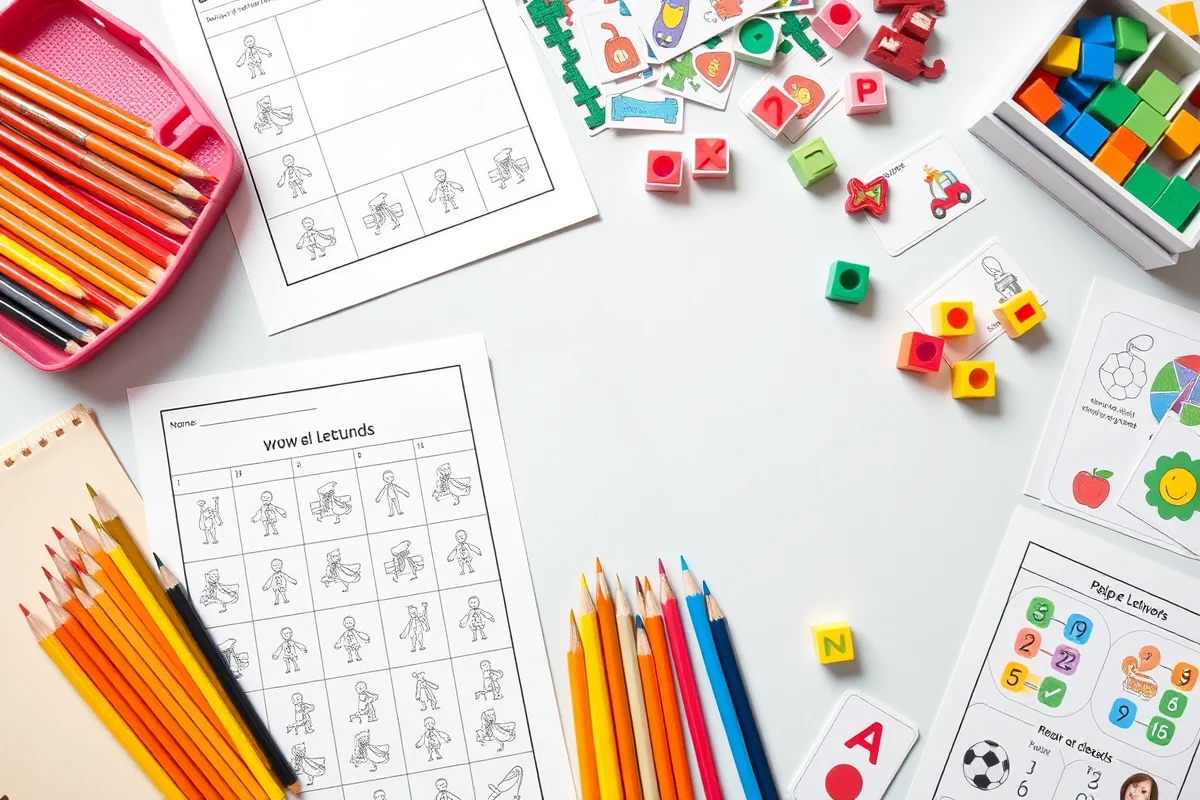
Another fun game is using a deck of cards to match numbers and shapes. I’ll lay out cards with numbers and shapes on them and ask my daughter to find the matching ones. It’s a game that keeps her engaged and learning at the same time.
These activities are especially useful for teaching kids how to categorize and compare things. It’s surprising how quickly they pick up on concepts like 'same' and 'different' when they’re playing.
Sorting and matching games turn learning into a fun and interactive experience.
Related: Pre k coloring sheets
Story Time and Reading: Building a Love for Books
I remember when I first started reading to my daughter every night. At first, she only wanted to look at the pictures, but now she can point out the letters and even read a few words. It’s amazing how much she’s learned just by reading together every day.
I’ve found that choosing books with interactive elements, like lift-the-flap pages or textured covers, keeps my daughter engaged for longer. We also like to act out the stories, which makes reading even more fun.
Reading together is not only a fun activity, but it also helps build a strong bond between parent and child. It’s the kind of activity that you can do anywhere — in the car, at the park, or even while waiting in line.
Books with lift-the-flap pages, textures, or sound features can make reading more engaging and interactive for preschoolers.
“When my daughter started pre-K, I was both excited and terrified.”— Earlyprintables editors
Related: Pre k art supplies
Art and Craft Time: Expressing Creativity and Fine Motor Skills
One of my favorite basic preschool activities is making finger paintings with washable paint. It’s a mess, but it’s also a lot of fun. I’ve noticed that my daughter loves using her fingers to create patterns and shapes.
We’ve also tried making paper collages with magazine clippings and glue. It’s a great way to teach her about textures and colors. I’ve seen her experiment with different combinations and even start to recognize patterns.
These activities are also a great way to teach her about mixing colors. I’ll sit with her and show her how to mix blue and yellow to make green. It’s a fun way to introduce her to basic art concepts.
Related: The periodic table of elements printable
Music and Movement: A Fun Way to Learn Through Rhythm and Song
I’ve found that playing music and dancing with my daughter is one of the most effective fun preschool activities. It helps her learn rhythm, improves her coordination, and is a great way to burn off some energy.
We love singing along to nursery rhymes and dancing to upbeat music. I’ve noticed that she can now recognize many of the songs and even sings them on her own. It’s amazing how quickly she picks up on music and rhythm.
I’ve also started using movement-based games, like 'Simon Says,' to teach her new vocabulary and improve her listening skills. It’s a fun way to keep her engaged and learning at the same time.
⭐ Classic
Use dried pasta and beans as the base for your sensory bin. This is the most traditional and widely used option.
💰 Budget
Substitute the dried pasta with dried rice or shredded paper to save money and reduce waste.
⚡ Extra-Fast
Skip the food coloring and use plain dried pasta and beans for a quick, no-frills sensory bin.
✨ Depth
Add different textures like shredded paper, dried flowers, or sand for a more sensory-rich experience.
🥗 Light
Use shredded paper or cornstarch as a light and safe option for younger children.
| The mistake | Why it happens | The fix |
|---|---|---|
| Using unsafe materials in sensory bins | Using small items like beads or marbles can be a choking hazard for young children. | Only use safe, non-toxic materials like dried pasta, beans, or shredded paper in sensory bins. |
| Not cleaning up after activities | Leaving toys or materials scattered around can be a tripping hazard and can also create a mess. | Always make sure to clean up after each activity and put away all toys and materials. |
| Choosing activities that are too complicated | If an activity is too complex, it can be frustrating for preschoolers and may not be as effective. | Choose activities that are simple, engaging, and age-appropriate for your child. |
| Not allowing enough time for each activity | If an activity is rushed or not given enough time, it may not be as effective or enjoyable for the child. | Allow enough time for each activity so that the child can fully engage and enjoy the experience. |
Related: Periodic table printable
Fun Easy Pre K Activities
Related: Pre k flashcards
Simple Science Experiments: Sparks of Curiosity in Everyday Materials
Use everyday materials to create simple, hands-on science experiments that engage and excite pre-k learners.
I’ve always believed that science doesn’t have to be complicated. Simple experiments using household items like baking soda, vinegar, and food coloring can create big excitement in pre-k classrooms. We’ve done volcano eruptions, color mixing, and even made slime using just a few ingredients. These activities not only teach basic scientific concepts but also encourage observation and prediction skills.
One of our favorite experiments involved mixing red and yellow food coloring to create orange. The kids were amazed at how colors change when mixed together. We also used baking soda and vinegar to create a mini volcano, which helped them understand reactions and cause and effect. These experiments are safe, fun, and can be completed in under 30 minutes, making them ideal for short learning sessions.
I’ve found that incorporating these experiments into our daily routine has made a big difference in how kids approach learning. They’re more eager to ask questions and make predictions, which is exactly what we want in early education. The best part is that these activities don’t require any special equipment—just a few common items you might already have at home. It’s a small investment with a big impact on curiosity and engagement.
Nature Walks and Outdoor Exploration: Learning Through the Environment
Nature walks offer a hands-on way for pre-K students to explore the world around them, enhancing observation skills and sparking curiosity about science and the environment.
I’ve taken my students on nature walks in our schoolyard and nearby parks, and it’s always a hit. We collect leaves, stones, and flowers, and then we use them for sorting, counting, and discussing textures and colors. My favorite part is when the kids ask questions like, 'Why is that leaf green?' or 'How does a bug move?' These moments lead to rich, spontaneous learning experiences that are both educational and engaging. The key is to keep the walk short — about 20 to 30 minutes — to maintain their attention and energy levels.
Common Questions
fun easy pre-k activities?
simple preschool activities?
basic preschool activities?
fun preschool activities?
easy fun activities for preschoolers?
References
- PDF Nature Based Learning Ideas Guide Birth to Pre-K (dcyf.mn.gov)
- Nature Revealed (Pre-K) - MDC Teacher Portal (education.mdc.mo.gov)
- PDF Learning Mathematics through Everyday Play in Prekindergarten (files.eric.ed.gov)
- Grow It, Try It, Like It! Nutrition Education Kit (fna.usda.gov)
Cite this guide
Earlyprintables (2026). Fun Easy Pre K Activities. https://earlyprintables.com/fun-easy-pre-k-activities/
Feel free to cite or share this guide.